St Basil Cathedral: A Monument to Conquest and Control

Mahacaraka® Press
Rising dramatically from Moscow’s Red Square with its whimsical domes and kaleidoscope of colours, St Basil’s Cathedral is one of the most recognisable landmarks in the world. For centuries, it has stood as a witness to the seismic shifts of Russian history. Its fairytale-like spires conceal a story shaped by political will, architectural innovation, religious devotion and ruthless myth-making.
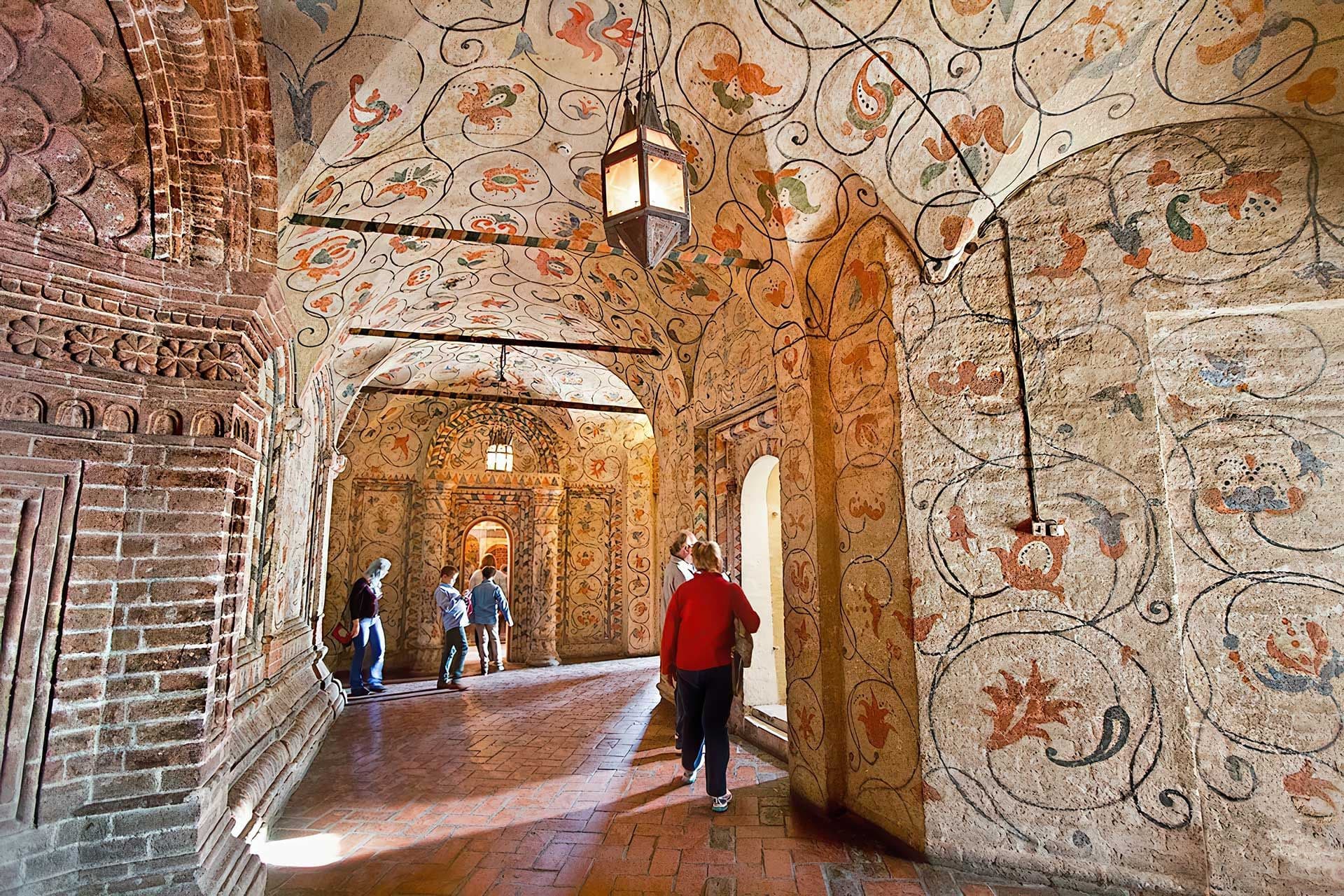
The cathedral was commissioned in 1555 by Tsar Ivan IV, better known as Ivan the Terrible, to commemorate the capture of Kazan and Astrakhan, marking Russia’s victory over the Mongol Tatar strongholds. The military campaign was deeply symbolic for the tsar, representing the consolidation of Orthodox power and the extension of the Russian state. Construction of the church began the following year, and it was completed in 1561.
Officially named the Cathedral of the Intercession of the Most Holy Theotokos on the Moat, the building was later popularly known as St Basil’s, after Basil the Blessed—a revered local holy fool, or yurodivy, who was buried near the church. In many ways, Basil came to personify the spirit of Moscow’s grassroots faith, drawing pilgrims from across the region. His remains were eventually interred within the cathedral itself, cementing the connection between the structure and his legacy.
Designed by architects Barma and Postnik Yakovlev, the cathedral’s layout is highly unconventional. Instead of one large sanctuary, it comprises nine chapels arranged around a central core. Each was consecrated in honour of a different saint connected to Ivan’s military victories. The plan echoes Byzantine and medieval Russian architecture, yet its asymmetry and vertical complexity mark a striking departure from tradition.
One enduring legend surrounding the cathedral is that Ivan the Terrible, so awed by its beauty, ordered the architect to be blinded so that nothing comparable could ever be built again. While popularised in Russian folklore and echoed in various writings, there is no contemporary evidence to support this. Some scholars argue that the story was crafted later to reflect the tsar’s notorious brutality, while others suggest it may have been confused with similar myths from the region. In fact, Postnik Yakovlev is documented to have worked on other projects after the cathedral’s completion, notably the Kazan Kremlin.
The cathedral’s exterior was not always as flamboyant as it appears today. Originally, the structure was clad in white stone with gilded domes, a more subdued aesthetic. The vividly coloured onion domes that define its current appearance were added in stages, particularly during the 17th century. The transformation was part of a broader Baroque revival across Russian ecclesiastical architecture, infusing older buildings with ornate surfaces and vibrant hues.
Throughout its existence, the building has been threatened repeatedly. During Napoleon’s invasion in 1812, French forces allegedly attempted to blow it up during their retreat but failed due to sudden rain extinguishing the fuses. Later, in the 1930s under Stalin’s regime, there were plans to demolish it to make way for parades in Red Square. Architect Pyotr Baranovsky famously refused to sign off on the demolition and was sent to a labour camp as a result. Thanks to public pressure and preservation efforts, the cathedral survived.
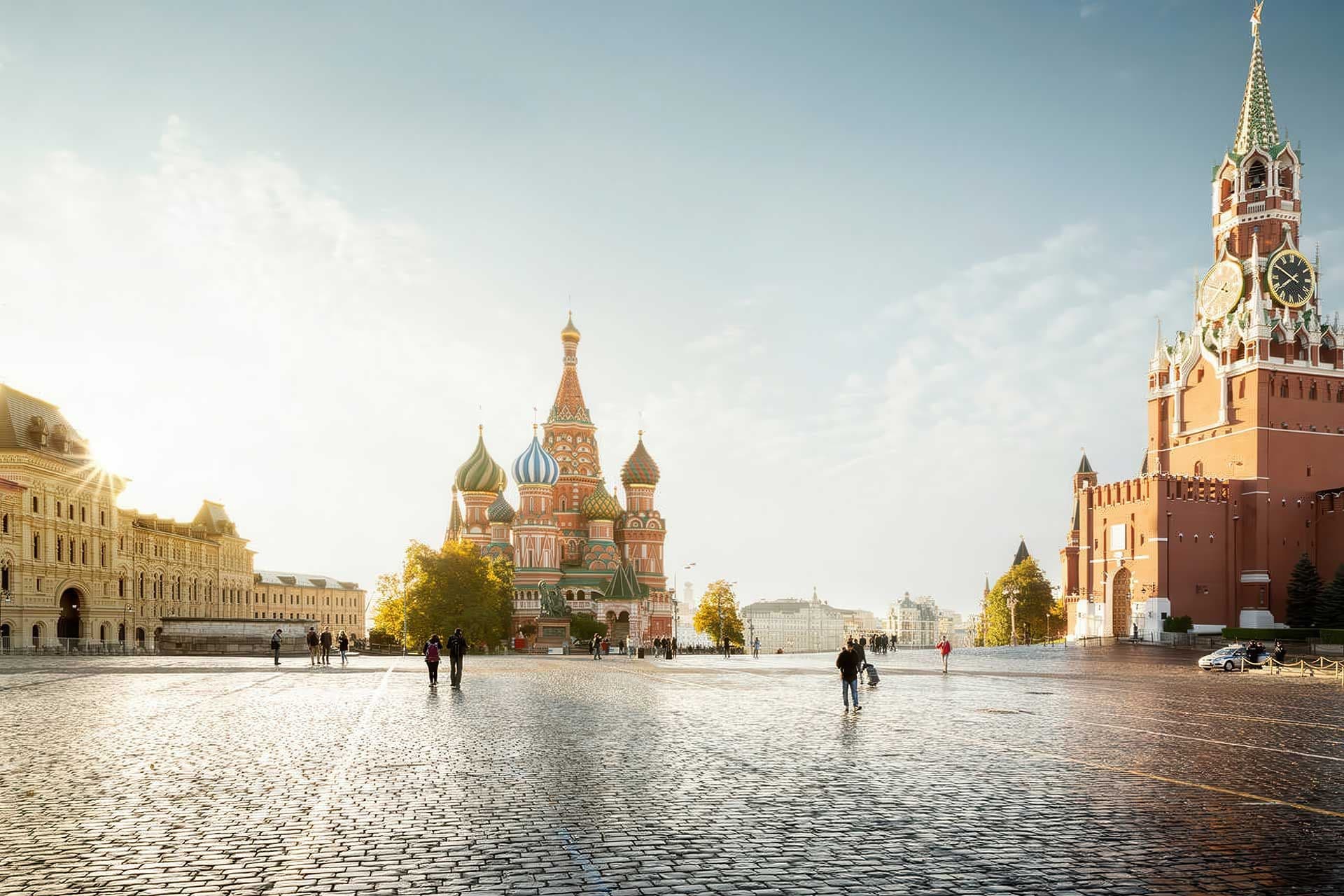
It ceased functioning as a church in 1929 and was turned into a museum under Soviet rule. Though stripped of its religious role, the structure continued to serve as a powerful visual representation of Russian identity, appearing in paintings, photographs, propaganda and eventually tourist brochures. Since the fall of the Soviet Union, limited religious services have returned on special occasions, though its primary function remains that of a cultural and historical monument.
The influence of St Basil’s extends far beyond Russia’s borders. Its distinctive domes and vibrant palette have inspired structures in countries as far afield as India and the United States. Moreover, it has become a key symbol of Russian cultural heritage, appearing in everything from children’s storybooks to Olympic opening ceremonies. Its silhouette is frequently used to evoke not just Moscow, but the entire Russian Federation.
Preservation of the building has become a matter of national pride. Restoration works have sought to maintain the balance between its historical integrity and modern safety standards. Research conducted in recent decades has shed new light on its original construction techniques, revealing sophisticated masonry and an early form of interlocking brickwork that contributed to its resilience in the face of fires, wars and earthquakes.
While it began as a celebration of conquest, the cathedral today stands for something greater. It is a symbol of endurance—religious, architectural and national. Beneath its playful colours lies a complex narrative of faith, tyranny, survival and reinvention. As both an artistic achievement and a cultural artefact, St Basil’s challenges easy categorisation.
In modern times, it draws millions of visitors annually, many of whom know little of the deeper history behind the domes. For those who pause and look closer, the structure offers more than beauty. It opens a window into the values, fears and ambitions of the Russia that built it—and the Russia that continues to preserve it.
To understand St Basil’s Cathedral is to understand the contradictions of Russian history: fierce power and profound devotion, cruelty and creation, isolation and influence. It remains one of the few places in the world where architecture speaks not just of form, but of the soul of a people.