The Life and Legacy of Mahatma Gandhi

Mahacaraka® Press
Few figures in modern history have embodied the power of peaceful resistance as resolutely as Mohandas Karamchand Gandhi. Revered across the globe and referred to by the honorific “Mahatma”, meaning “great soul”, he remains a symbol of nonviolent struggle, spiritual resilience, and moral clarity. Yet his life and legacy are not without complexity, and any honest examination of his impact must reckon with both admiration and critique.
Born on 2 October 1869 in Porbandar, a coastal town in present-day Gujarat, India, Gandhi grew up in a Hindu household steeped in the Jain traditions of nonviolence, vegetarianism, and introspection. His father served as the chief minister of the local princely state, providing the young Mohandas with exposure to political discourse. At the age of 18, he left for London to study law at Inner Temple. This period shaped much of his early worldview, exposing him to Western political philosophy, including the works of Henry David Thoreau, Leo Tolstoy, and John Ruskin, whose ideas on civil disobedience, simplicity, and social justice would resonate with him deeply.
Following his studies, he moved to South Africa in 1893 to practise law, a journey that proved pivotal. Confronted by institutionalised racism, Gandhi experienced firsthand the brutal inequalities faced by the Indian diaspora. One defining incident occurred on a train when he was thrown out of a first-class compartment despite holding a valid ticket. The humiliation sparked in him a deeper commitment to justice. Over the next two decades, he became an outspoken advocate for the civil rights of Indians in South Africa, developing and testing his philosophy of satyagraha — a method of nonviolent resistance rooted in truth and moral courage.
His return to India in 1915 marked the beginning of a transformative chapter, both for him and for the subcontinent. India, then under British colonial rule, was simmering with unrest. The colonial state had entrenched itself through economic exploitation and systemic repression. Gandhi’s approach to resistance stood apart from previous methods: he insisted that moral authority could be a weapon stronger than violence.
The 1919 Jallianwala Bagh massacre, where British troops killed hundreds of unarmed civilians during a peaceful gathering in Amritsar, catalysed widespread outrage. Gandhi responded by launching the Non-Cooperation Movement in 1920, encouraging Indians to boycott British goods, institutions, and honours. His message was clear — reclaiming dignity did not require arms, but discipline and solidarity.
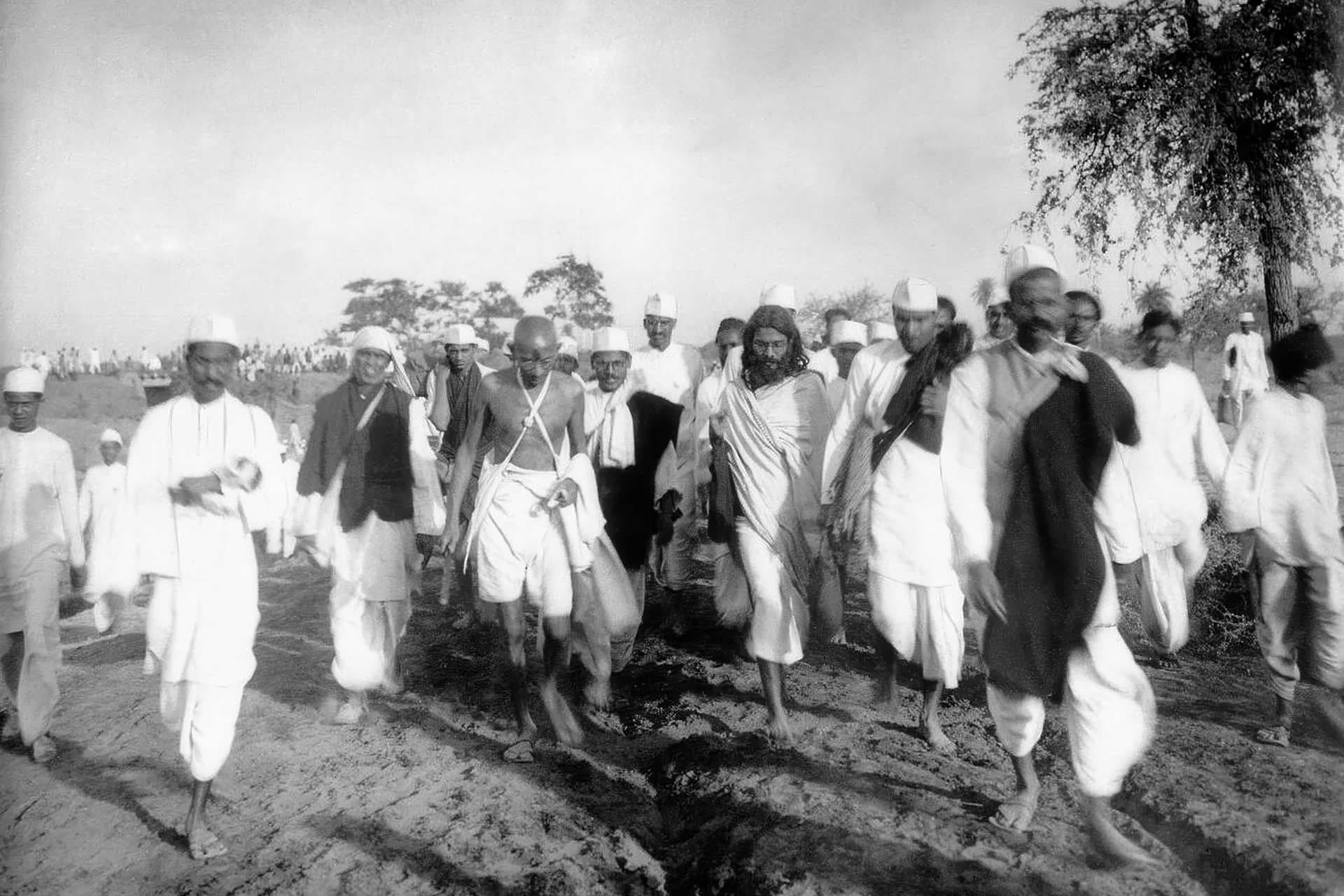
Through the 1920s and 1930s, Gandhi became not only a political leader but a cultural figurehead. He abandoned Western dress in favour of homespun khadi, symbolising self-reliance and resistance to colonial economics. The Salt March of 1930, in which he led followers on a 240-mile walk to the Arabian Sea to produce salt in defiance of British law, was a masterstroke of civil disobedience. It captured global attention and cemented his reputation as a leader of moral authority.
However, his methods and ideals were not universally embraced. Critics within the Indian independence movement, including B.R. Ambedkar and Subhas Chandra Bose, challenged both his tactics and philosophies. Ambedkar, a champion of the Dalit community, viewed Gandhi’s approach to caste reform as insufficient and patronising. Bose, a nationalist who later aligned with Axis powers in pursuit of Indian independence, rejected nonviolence as ineffective against colonial rule.
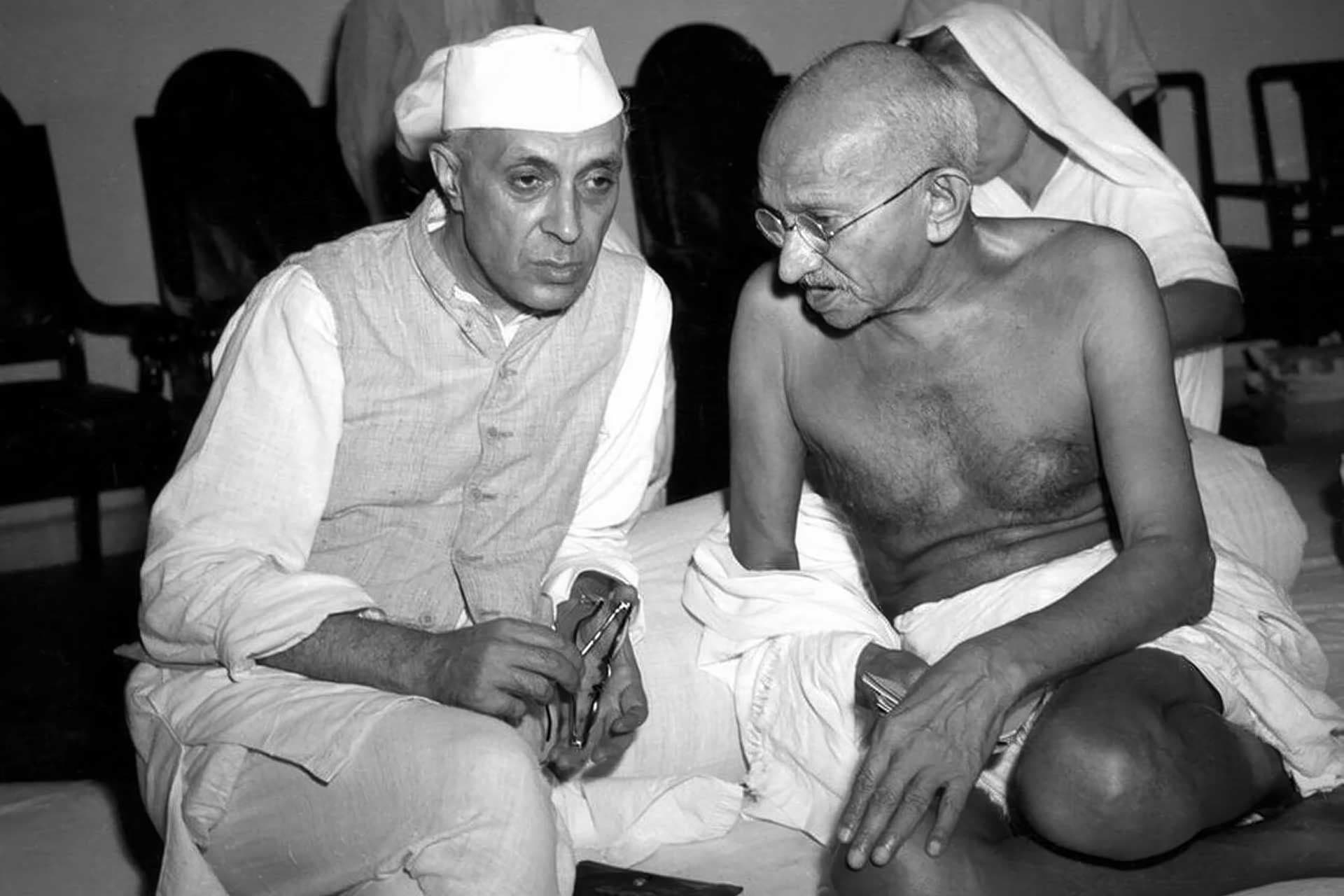
Moreover, Gandhi's views on race during his early years in South Africa, particularly concerning Black Africans, have been re-examined in recent scholarship. His writings from that period reveal prejudices that contrast sharply with his later humanist ideals. While he evolved over time, these early attitudes remain a subject of critical debate.
Despite the disagreements, his influence on India's path to independence is undeniable. The Quit India Movement of 1942, initiated under his leadership, demanded an immediate end to British rule. Though it was met with harsh repression, the movement galvanised a mass uprising that made colonial governance increasingly untenable. On 15 August 1947, India finally gained independence.
The triumph, however, was bittersweet. The subcontinent was partitioned into India and Pakistan, triggering one of the largest and bloodiest migrations in human history. Gandhi was heartbroken by the communal violence that followed, particularly between Hindus and Muslims. He devoted his final months to promoting reconciliation, fasting repeatedly to quell riots and urging unity among fractured communities.
His assassination on 30 January 1948 by Nathuram Godse, a Hindu nationalist who believed Gandhi had betrayed Hindus by appeasing Muslims, shocked the world. The man who had wielded no army, led no official government, and held no formal office, was mourned by millions.
In the decades that followed, Gandhi’s methods became a blueprint for resistance movements across the globe. Martin Luther King Jr., Nelson Mandela, César Chávez, and Aung San Suu Kyi all cited him as an inspiration. His philosophy of nonviolence — though often misunderstood as passive — demanded immense strength and discipline, and proved its capacity to challenge oppressive systems without perpetuating cycles of harm.
His legacy in India remains both revered and contested. Politically, he is enshrined as the Father of the Nation, his image appearing on currency and statues across the land. Yet contemporary debates question whether the nation has truly embraced his ideals. The persistence of caste discrimination, religious polarisation, and economic inequality suggests that the Gandhian dream of a just and harmonious society remains unfulfilled.
Outside India, his life continues to be studied, criticised, and celebrated. Numerous biographies, films, academic works, and exhibitions explore the layers of his character. He was a spiritual ascetic, a political strategist, a moral philosopher, and at times, a conflicted and flawed man navigating the contradictions of his era.
In reflecting upon his life, it becomes clear that Gandhi’s greatest contribution may not lie solely in the liberation of a nation, but in demonstrating how the conscience, when wielded with purpose and compassion, can move the seemingly immovable. His was a vision of courage without cruelty, resistance without hatred — a vision still urgently relevant in a world grappling with violence, division, and the erosion of moral leadership.