Two Thrones One Destiny The Journey of Dom Pedro I

Mahacaraka® Press
In the early 19th century, a seismic shift was rippling through the Portuguese Empire. Monarchies across Europe were under siege, colonies were yearning for independence and a royal family would soon do the unthinkable — abandon their European seat of power and sail across the Atlantic. At the heart of this political whirlwind stood Dom Pedro I of Brazil, also known as Pedro IV of Portugal, a figure both revered and reviled, admired and misunderstood. His life bridged two continents, two crowns and left a legacy that would forever change the fate of Brazil and Portugal.
Born in Lisbon on 12 October 1798, Pedro de Alcântara Francisco António João Carlos Xavier de Paula Miguel Rafael Joaquim José Gonzaga — as was his full regal name — was the second son of King João VI of Portugal and Queen Carlota Joaquina. His youth was shaped not by the quiet corridors of a European palace, but by the turbulent journey of empire in crisis. In 1807, as Napoleon’s forces approached Lisbon, the Portuguese court made a dramatic escape to Brazil, their most prized colony. This marked the first time a European monarchy ruled its empire from a colony rather than the metropole, and for young Pedro, Brazil would become more than just a place of refuge — it would be home.
The move to Rio de Janeiro effectively turned Brazil from a colony into the new heart of the Portuguese Empire. The city became the imperial capital, and Pedro matured in a political landscape thick with competing interests — local Brazilian elites who had tasted autonomy, Portuguese conservatives who clung to tradition and European ideologies of liberalism that had begun to echo across the Atlantic.
By 1821, the tide began to turn. After the defeat of Napoleon, the Portuguese elite demanded the return of the royal family. King João VI complied, but left his son Pedro behind as regent. It was a decision that would reshape the future. Tensions between Rio and Lisbon escalated, especially as the Portuguese Cortes attempted to reduce Brazil back to colonial status. Calls for independence grew louder, and in a defiant moment on 7 September 1822 near the Ipiranga River, Pedro famously declared Brazil’s independence with the cry of “Independência ou Morte!” (Independence or Death!). Within weeks, he was crowned Emperor Pedro I of Brazil.
Unlike many independence movements that resulted in republics, Brazil’s separation from Portugal birthed a constitutional monarchy. Dom Pedro positioned himself as a liberal emperor, advocating for a constitutional charter and promising to bridge the interests of local elites and broader national unity. The Brazilian Empire, under his reign, was among the few post-colonial monarchies to emerge in the 19th century.
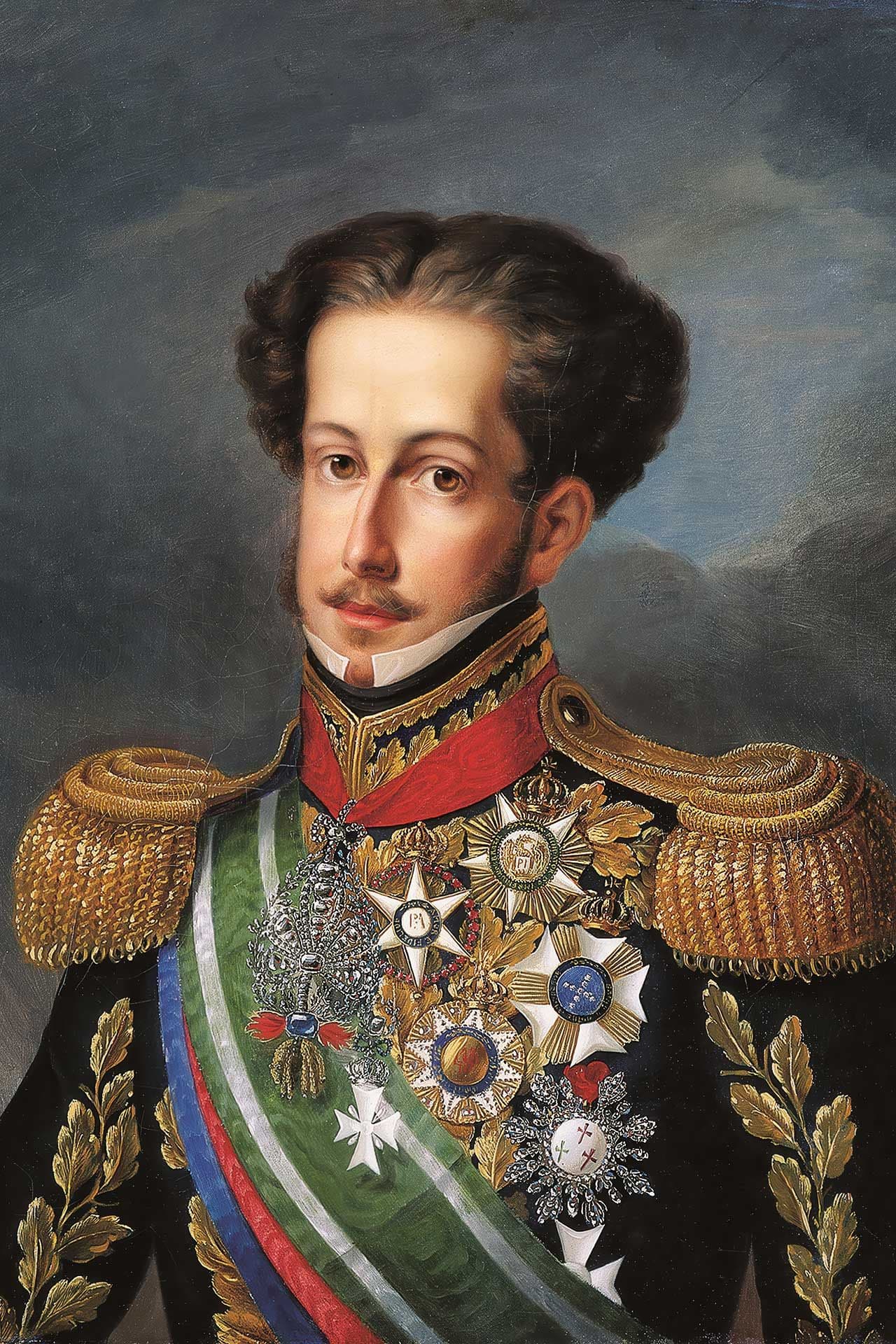
Yet his rule was not without turmoil. His popularity began to wane due to his perceived favouritism towards Portuguese courtiers, his authoritarian tendencies and Brazil’s economic struggles. One of the most contentious moments was his involvement in the Cisplatine War, which ultimately led to the loss of Uruguay in 1828. Political unrest, growing republican sentiments and mounting opposition within the Brazilian parliament weakened his authority. In 1831, facing mounting pressure, Pedro abdicated in favour of his five-year-old son, Pedro II, and returned to Portugal.
His departure from Brazil marked the end of a short but decisive reign. Back in Europe, a different crisis awaited. Portugal was embroiled in a civil war between liberal constitutionalists and absolutist forces led by his brother Miguel, who had usurped the throne. Although weary and ailing, Pedro led the liberal cause, fighting to reinstate constitutional monarchy. After a prolonged conflict, victory was secured in 1834, and he restored the crown to his daughter, Maria II. Just months later, on 24 September 1834, Dom Pedro died in Queluz Palace at the age of 35.
Despite his relatively short life, his dual reigns in Brazil and Portugal left a profound imprint. He became a symbol of liberal constitutionalism in Europe and the architect of Brazilian independence. His legacy, however, is riddled with contradictions. In Brazil, he is remembered both as a liberator and as an elite aristocrat disconnected from local grievances. In Portugal, he is admired for his commitment to constitutional ideals but was also viewed with suspicion for his abdication and foreign entanglements.
Culturally, his impact reverberates through the institutions he helped establish. Brazil’s imperial structure under Pedro I and later Pedro II laid the groundwork for the country’s modern governance. His 1824 constitution was, for its time, relatively progressive, enshrining civil liberties and separating powers. The imperial capital, Rio de Janeiro, blossomed under his patronage, attracting artists, architects and thinkers from across the Atlantic. Even today, echoes of his rule can be found in the architecture, national symbols and political philosophy of modern Brazil.

In recent years, his remains have become a point of historical reflection and reconciliation. In 1972, during the 150th anniversary of Brazilian independence, his heart was symbolically returned to Brazil from Porto in a ceremonial gesture that underlined his enduring connection to both nations. It now rests in São Paulo's Monument to Independence, not far from where he had once declared the birth of a new empire.
The story of Dom Pedro I is one of conflict and convergence — between monarchy and modernity, between old world empires and new world identities. He did not just navigate the age of revolutions; he embodied its contradictions. Travellers visiting Rio de Janeiro, Lisbon or Porto today can still trace the contours of his legacy — in palace corridors, city squares and the unresolved debates about identity, liberty and sovereignty that still resonate in both countries.
In the end, his life defied simple categorisation. Not merely a monarch or a revolutionary, Dom Pedro I was a bridge between collapsing empires and emerging nations, leaving behind a legacy shaped as much by idealism as it was by pragmatism. His story is a reminder that the forging of nations is rarely clean, rarely heroic in simple terms, and always worth revisiting with both admiration and scrutiny.