How to Capture the Magic of Fireworks

Mahacaraka® Press
As the clock ticks closer to the New Year, many of us will seek a open view of the shimmering sky bursting in colour. For travel-photography enthusiasts, these moments offer the perfect blend of spectacle and place. Yet when you lift your camera into the darkness to photograph fireworks, what you see in the viewfinder isn’t always what appears in your final image. With the right techniques and equipment, you can turn fleeting bursts of light into long-lasting memories. This guide explores how to plan, shoot and refine your fireworks photographs, transforming them into stunning visual stories.
Before any burst of light fills the sky, success is largely determined by where you position yourself. Arrive early to secure a vantage point with a clear view of the launch area. Bear in mind crowds, obstacles, and ambient lighting. Pick a spot upwind of the fireworks to avoid smoke drifting into your frame, as smoke can obscure bursts and soften contrast. Include elements of the surrounding environment, a shoreline, a landmark, the crowd, reflections on water, to add a sense of place and depth rather than showing mere streaks of colour. Anticipate the direction of the fireworks and leave enough sky and foreground in your composition. A wide-angle lens can help capture the full scene. A thoughtful location means you’re not chasing the bursts, but rather setting the stage for them.
Holiday moments may be hurried, but the best images are built on solid preparation. You’ll want a camera that allows full manual control over shutter speed, aperture and ISO. Many built-in scene modes won’t give you the flexibility needed. A sturdy tripod is essential, as exposures will often last several seconds and any shake will blur your scene. A remote shutter release or intervalometer prevents camera movement and allows you to shoot more comfortably. When choosing a lens, a wide to standard zoom, around 24–70 mm, is ideal for most situations. If you’re far from the display, a telephoto lens can help isolate the bursts. Don’t forget extra batteries and memory cards; long exposures and cold nights can drain power faster than expected. A lens hood and cleaning cloth also come in handy, protecting your gear from smoke or moisture.
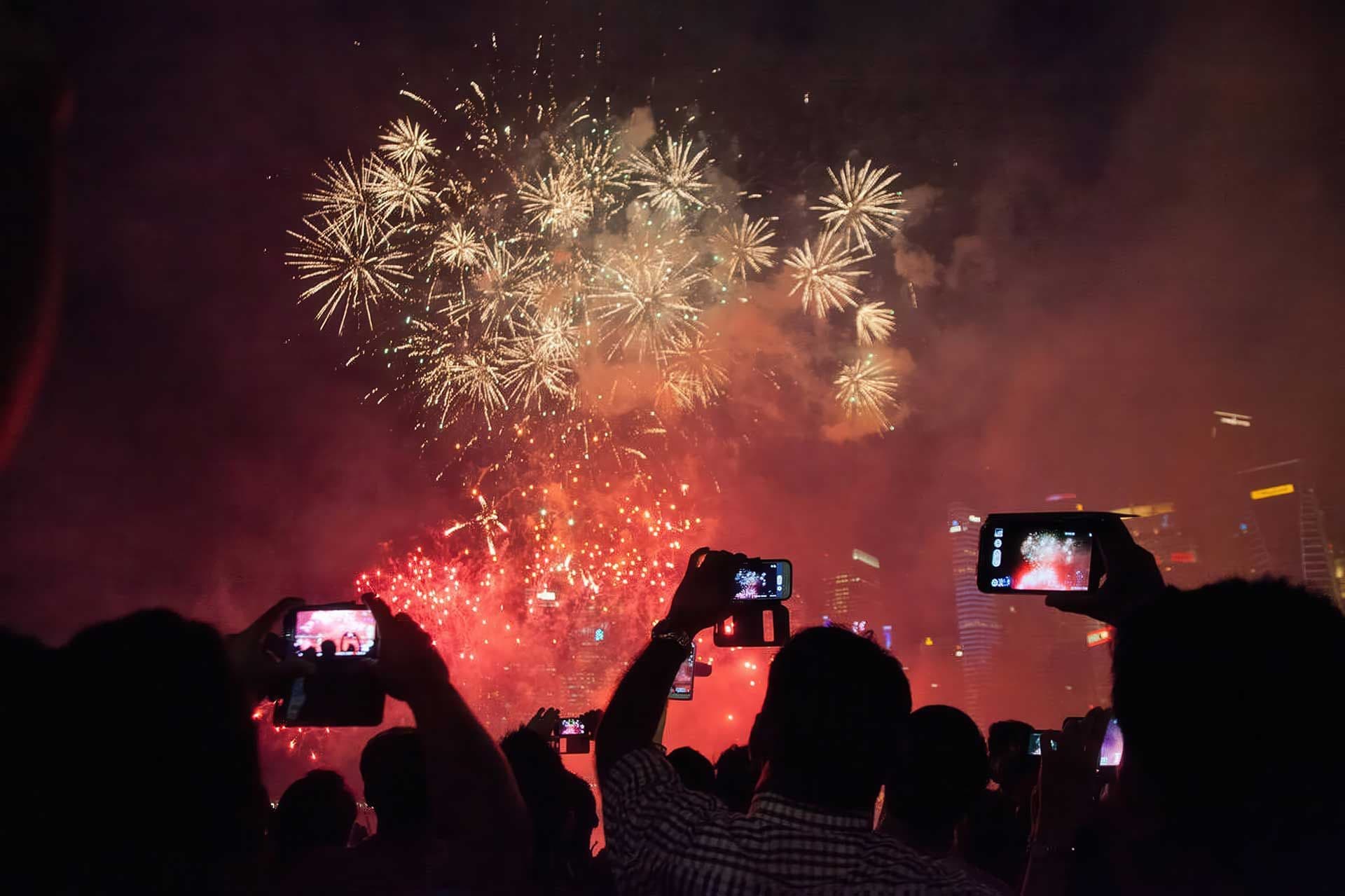
With your scene and gear ready, setting up the camera correctly is vital. Automatic modes rarely deliver the control or precision you need for fireworks. Manual or Bulb mode allows you to decide exactly when the shutter opens and closes. Start with exposures around two to five seconds to capture the trails, and adjust as needed. Apertures between f/8 and f/11 offer balanced depth and sharpness. If bursts are particularly bright or you’re layering several in one frame, closing down to f/16 can help. Keep ISO low, ideally 100 or 200, to avoid digital noise in the sky. Switch to manual focus and set it to infinity or focus on a distant landmark; autofocus often struggles in low light. White balance can be left on auto or set around 5300 K to maintain consistent tones. Always shoot in RAW format to allow full flexibility during post-processing.
Once the show begins, timing and composition become your creative tools. The first bursts often appear against the cleanest sky with minimal smoke, so capture them early. If you’re near water or a reflective surface, include it in the frame to double the visual impact. Buildings, silhouettes or crowds can provide valuable context. Try applying the rule of thirds—place the launch point off-centre to emphasise movement and direction. For finales, shorten your exposure to one or two seconds to prevent over-exposure as multiple bursts fill the sky. Throughout the show, monitor how smoke builds up and adjust your position if necessary. Above all, remain patient and flexible; fireworks are unpredictable, and each burst offers a new opportunity.
Once you’ve mastered the basics, consider adding creative variations. One technique is to zoom your lens during a long exposure, creating radiating streaks of light. Another is to adjust focus during the burst, shifting from blur to sharpness for a dreamy effect. You can also use longer exposures—eight to fifteen seconds—to capture multiple fireworks in a single frame. These effects take practice and a steady hand, but they can elevate your images from documentary to artistic. Try them once you’re confident with your standard settings.
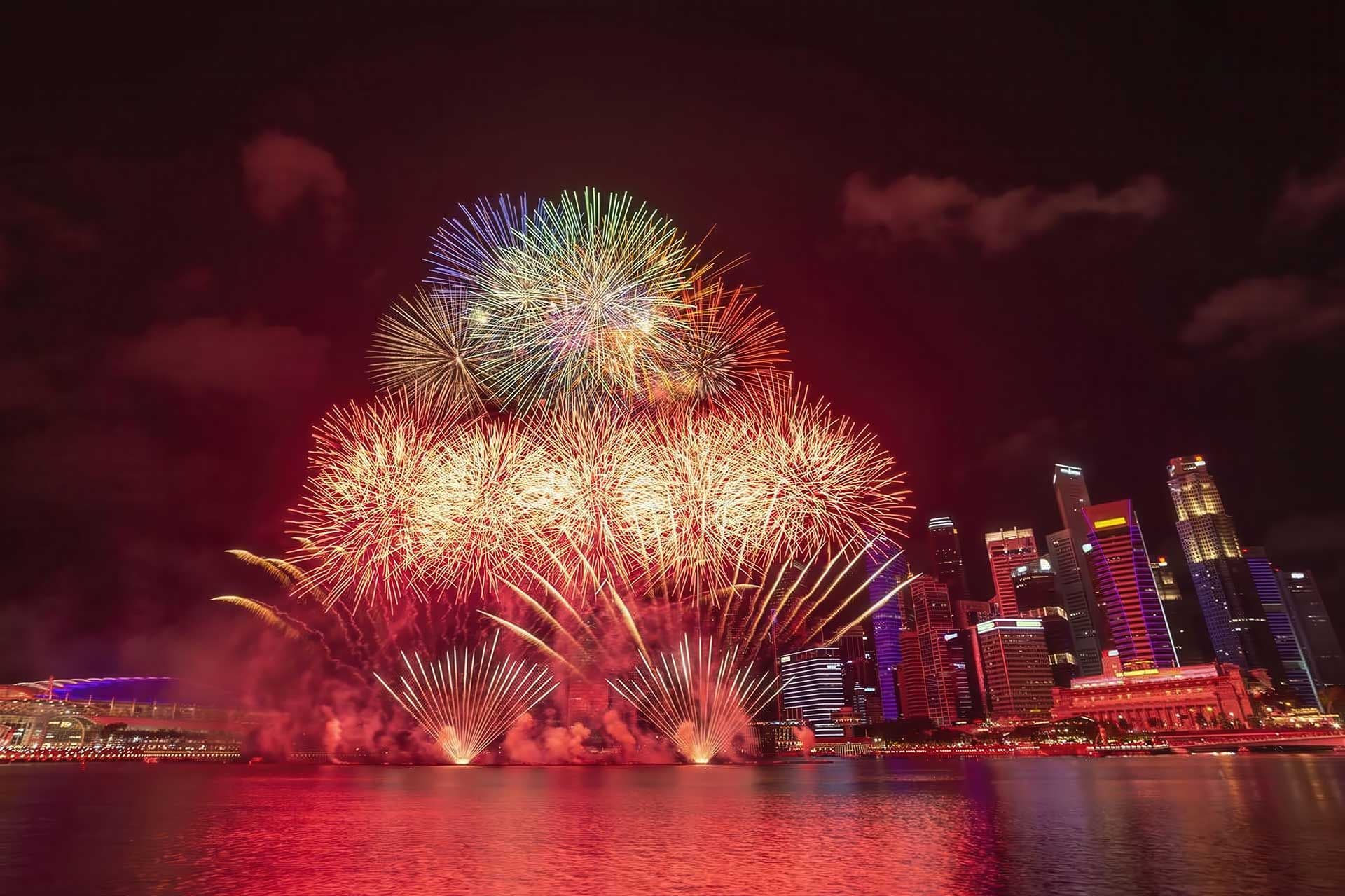
After the final spark fades, post-processing helps polish your results. Review your shots to ensure the highlights aren’t overexposed; once detail in the bursts is blown out, it can’t be recovered. Cropping can refine the composition or remove distractions without losing context. Adjust white balance and contrast carefully to preserve the natural colour of the explosions. Use selective noise reduction in darker areas, since long exposures can add grain. Apply sharpening lightly to maintain the softness of the trails. When sharing your images, include captions or short notes about the location and atmosphere—it turns a technical shot into a personal story.
For your New Year’s celebration, keep a simple checklist. Arrive early to test framing and assess wind direction. Set up your tripod and disable flash. Use manual settings: ISO 100-200, aperture f/8-f/11, and shutter around two to five seconds. Focus manually, use a remote or timer, and review images throughout the show. Adjust exposure times as the display intensifies. Once home, process your RAW files with gentle corrections and save your best frames in high resolution.
Fireworks photography combines anticipation, patience, and technical precision. The art lies not only in freezing motion but also in capturing emotion—the cheers, the colours reflected on faces, the fleeting glow that signals both an ending and a beginning. With preparation and practice, those bright trails across the midnight sky become more than bursts of light; they become your record of celebration and renewal. When the first rocket rises and the sky ignites, let your camera witness the moment.