Jiuzhaigou: Through Mist and Memory in the Valley of Nine Villages

Mahacaraka® Press
Tucked away in the northern reaches of Sichuan Province, Jiuzhaigou is a place that seems almost otherworldly. Officially known as Jiuzhaigou Valley Scenic and Historic Interest Area, this UNESCO World Heritage Site covers over 72,000 hectares and sits at the edge of the Tibetan Plateau. Its name means "Valley of Nine Villages," a nod to the Tibetan settlements that have called the region home for centuries. But Jiuzhaigou is more than a photogenic location filled with turquoise lakes and dramatic alpine scenery — it is a place shaped by geological marvels, cultural resilience, and spiritual beliefs.
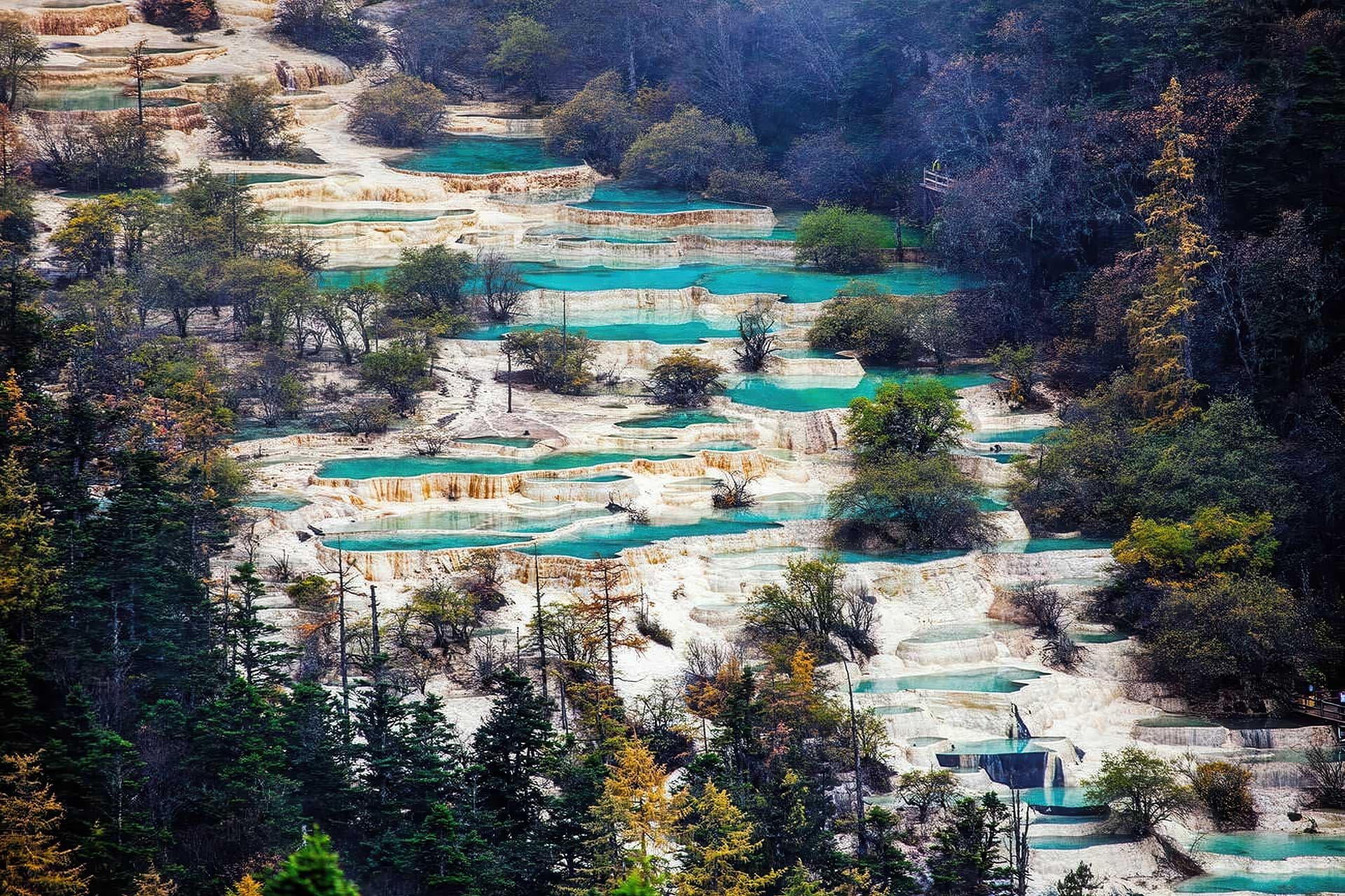
Formed through a combination of glacial activity, calcium carbonate deposits, and tectonic shifts, the terrain of Jiuzhaigou is both rugged and serene. The valley was virtually unknown to outsiders until the 1970s, when Chinese researchers ventured into its depths. What they discovered was a pristine world where waterfalls cascaded over mineral-rich cliffs, forests clung to limestone ridges, and lakes reflected the sky in near-perfect clarity. Since its opening to tourism in the 1980s, the region has drawn millions each year, particularly during the autumn months when its foliage erupts in a stunning spectrum of gold, amber, and crimson.
Autumn, in particular, has become synonymous with the soul of Jiuzhaigou. From late September to early November, the park becomes a natural palette, contrasting fiery leaves with the lakes' icy blue and jade tones. The altitude — ranging from 2,000 to over 4,500 metres — creates unique climatic conditions that foster dramatic colour changes. At this time of year, the air is crisp, the crowds more manageable compared to summer, and visibility is at its peak, offering unparalleled views of the valleys and peaks.
The valley's lakes are arguably its most iconic features. Among them, Five Flower Lake is perhaps the most photographed. Its name derives from the multicoloured plant life and minerals beneath its waters, creating a surreal underwater mosaic. Then there's Long Lake, the deepest in the park, framed by snow-capped mountains and often shrouded in morning mist. Mirror Lake, on the other hand, offers reflections so pristine that it feels as though one is looking at a world turned upside down.
Beyond the scenery lies a rich cultural heritage. Jiuzhaigou is located within the Aba Tibetan and Qiang Autonomous Prefecture, and its cultural identity is strongly tied to the Amdo Tibetans who inhabit the area. Their presence predates written records, and their customs remain deeply interwoven with the land. Even today, visitors may come across prayer flags fluttering from trees, Mani stones carved with sacred inscriptions, or small shrines nestled between roots and rocks.

For the Tibetan communities, the natural world is not merely beautiful — it is sacred. Each lake, mountain, and forest has a spirit or guardian, and many local myths explain the origins of these natural features through divine intervention or legendary tales. One well-known legend recounts how the goddess Semo dropped her magic mirror, shattering it into 108 pieces which then became the lakes of Jiuzhaigou. This blend of folklore and animism has helped preserve the environment, as spiritual reverence for the land discourages exploitation.
A journey to Jiuzhaigou is not complete without understanding how it fits into the broader context of Tibetan Buddhism. Monasteries such as the nearby Zhaga Monastery offer glimpses into the spiritual practices of the region. Although modest in size compared to the grand institutions of Lhasa, they are vital centres of worship and community life. Pilgrims often walk great distances to these monasteries, spinning prayer wheels and reciting mantras as part of their devotion.
While the main tourist infrastructure is focused around the Jiuzhaigou National Park entrance, those seeking more off-the-beaten-path experiences can explore the surrounding villages. Hezeng and Heye, for example, provide opportunities to witness Tibetan rural life, taste barley-based cuisine like tsampa, and observe traditional weaving or wood carving. Staying in local guesthouses adds another layer to the travel experience, bridging the visual with the personal.
The area has also faced challenges. A powerful earthquake in August 2017 caused significant damage to parts of the park and surrounding communities. In the years since, careful reconstruction efforts have prioritised both safety and environmental sustainability. As a result, certain sections remain closed or have limited access, but the majority of the park has reopened, and its natural beauty remains intact.

Getting to Jiuzhaigou requires commitment. The nearest airport, Jiuhuang Airport, is connected by flights from major cities like Chengdu and Chongqing. From there, it’s a winding 1.5-hour drive through scenic mountain roads. For those with time, overland travel from Chengdu offers a rewarding journey through traditional Tibetan villages, yak-dotted grasslands, and otherworldly landscapes.
What makes Jiuzhaigou unique is not just its aesthetic appeal, but its ability to evoke a deeper connection with nature and culture. It’s a place where silence is meaningful, where colours seem to breathe, and where every path holds layers of geological, ecological, and spiritual history. Travelling here in autumn is not merely about catching peak foliage — it is about witnessing a sacred convergence between natural cycles and cultural memory.
For those drawn to destinations that offer more than just scenery, Jiuzhaigou stands as a reminder of the quiet power of preservation, reverence, and place. A single visit may last only a few days, but the impressions linger far longer, carried in the memory like reflections on the surface of Five Flower Lake.