Krampus Night: When Christmas Meets the Dark Side of Folklore

Mahacaraka® Press
Each December, while most of the Western world readies itself for the warmth of Christmas lights and the gentle image of Saint Nicholas, certain Alpine towns erupt in a very different kind of celebration. Instead of jingling sleigh bells and cherubic carollers, the cobbled streets echo with rattling chains, guttural growls, and the stomp of horned creatures cloaked in fur. This is Krampus Night — or Krampusnacht — a folkloric ritual deeply rooted in pre-Christian Europe, where festive cheer meets primal fear.
Observed annually on the evening of 5 December, the night before the Feast of Saint Nicholas, Krampus Night blends centuries of pagan belief with Christian tradition. In towns across Austria, southern Germany, parts of Hungary, northern Italy, and Switzerland, masked figures dressed as Krampus emerge from the shadows. Their twisted horns, blood-red tongues, and cowbell-laden belts create an atmosphere that is both theatrical and eerily ancient. These creatures are not random monsters — they serve a purpose. They punish the wicked, frighten the complacent, and, some believe, remind humanity of its darker instincts.
The origins of Krampus reach far beyond Christianity. The character likely descends from pagan traditions tied to the winter solstice, particularly from Germanic folklore. Long before the introduction of Saint Nicholas into Alpine lore, pre-Christian communities marked midwinter with rites involving wild spirits, ancestral beings, and forest deities. Some scholars draw connections between Krampus and the Norse figure Hel, or with the horned god representations of Celtic spirituality. These midwinter rituals were often rowdy, filled with masks and processions intended to chase away evil spirits and usher in the rebirth of the sun.
When Christianity expanded into the Alpine regions around the 6th century, it did not entirely erase these practices. Instead, it co-opted them. Saint Nicholas, the kind and generous bishop of Myra, became the new face of winter celebration, but his presence did not entirely replace older fears. Instead, Krampus was paired with the saint — a wild, threatening counterpart to his benevolent role. While Saint Nicholas rewards the good children with gifts and fruits, Krampus carries switches or birch rods, chains, and baskets in which to carry off the disobedient.
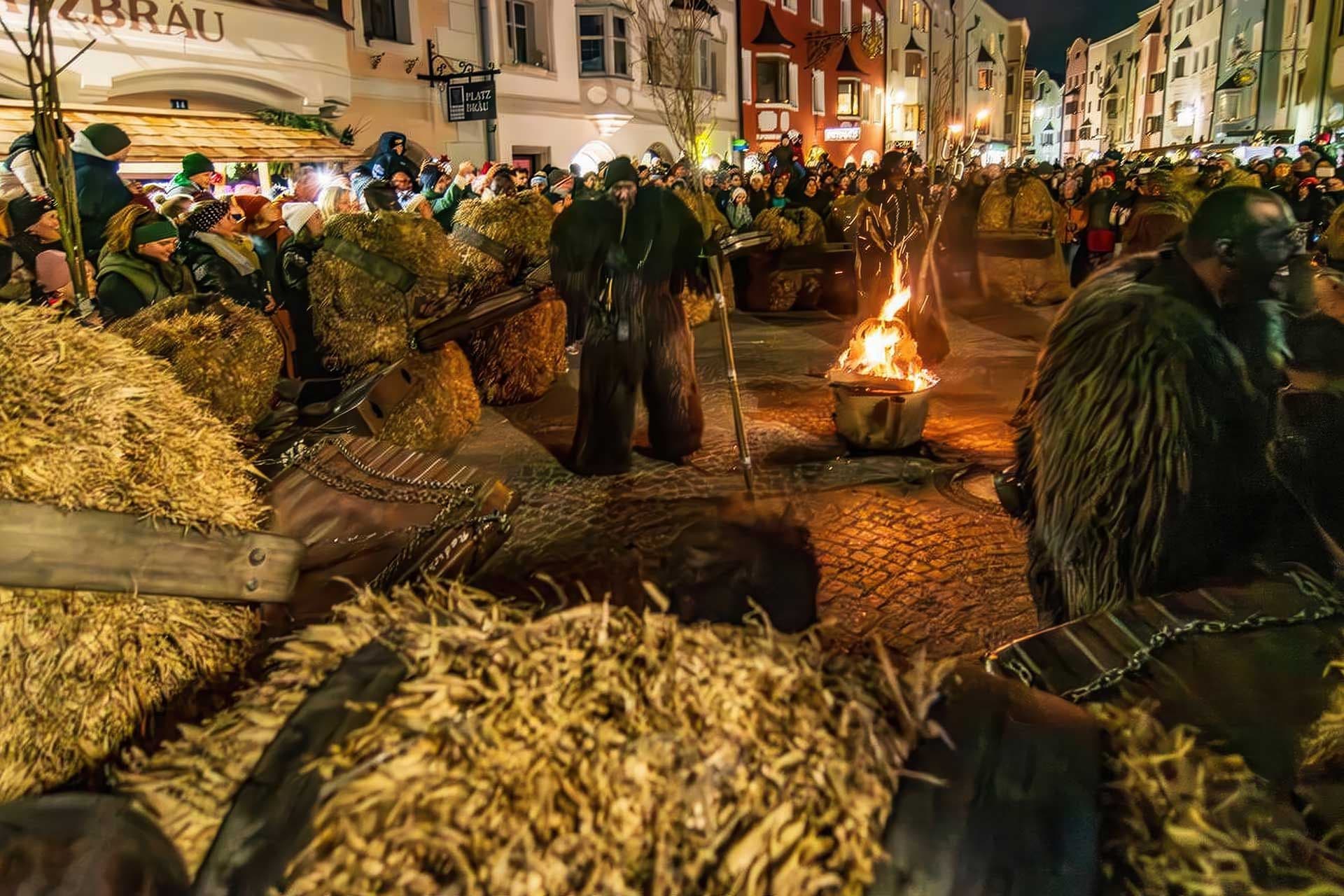
This balance of moral reward and punishment mirrored the Church's growing influence, which sought to integrate rather than obliterate local customs. By the 17th century, Krampus and Saint Nicholas processions had become established seasonal events, especially in Austria and Bavaria. Though the Church periodically attempted to suppress Krampus imagery — particularly during the Inquisition and again under fascist regimes in the 20th century — the creature endured, surviving as a symbol of rural resistance and cultural identity.
Today, Krampus Night has experienced a resurgence, not just in its traditional heartlands, but across the globe. The Krampuslauf or "Krampus run" is a highlight in towns such as Salzburg, Innsbruck, and Berchtesgaden. Dozens, sometimes hundreds, of performers in handcrafted wooden masks and sheepskin suits parade through the streets, terrifying onlookers with fire, noise, and mayhem. For visitors, it’s a remarkable blend of theatricality and cultural depth, offering a glimpse into a Europe not defined solely by cathedrals and cafes but by the enduring pull of the folkloric underworld.
Tourists wishing to witness Krampusnacht at its most authentic should aim for the Tyrolean region of western Austria, where local communities have kept the tradition alive for generations. The towns of Lienz and St. Johann im Pongau host particularly elaborate events, with entire villages participating. Many travellers pair their Krampus experience with a visit to a traditional Christmas market — creating a sharp contrast between the angelic and the diabolical.
But the spectacle is not merely a gimmick for thrill-seekers. Behind the horns and hides lies a complex reflection of social order, fear, and identity. In some places, Krampus is used to teach children about morality and consequences. In others, he represents a deeper tension between civilisation and chaos, echoing ancient beliefs that the world must confront its demons before it can welcome the light of Christmas.
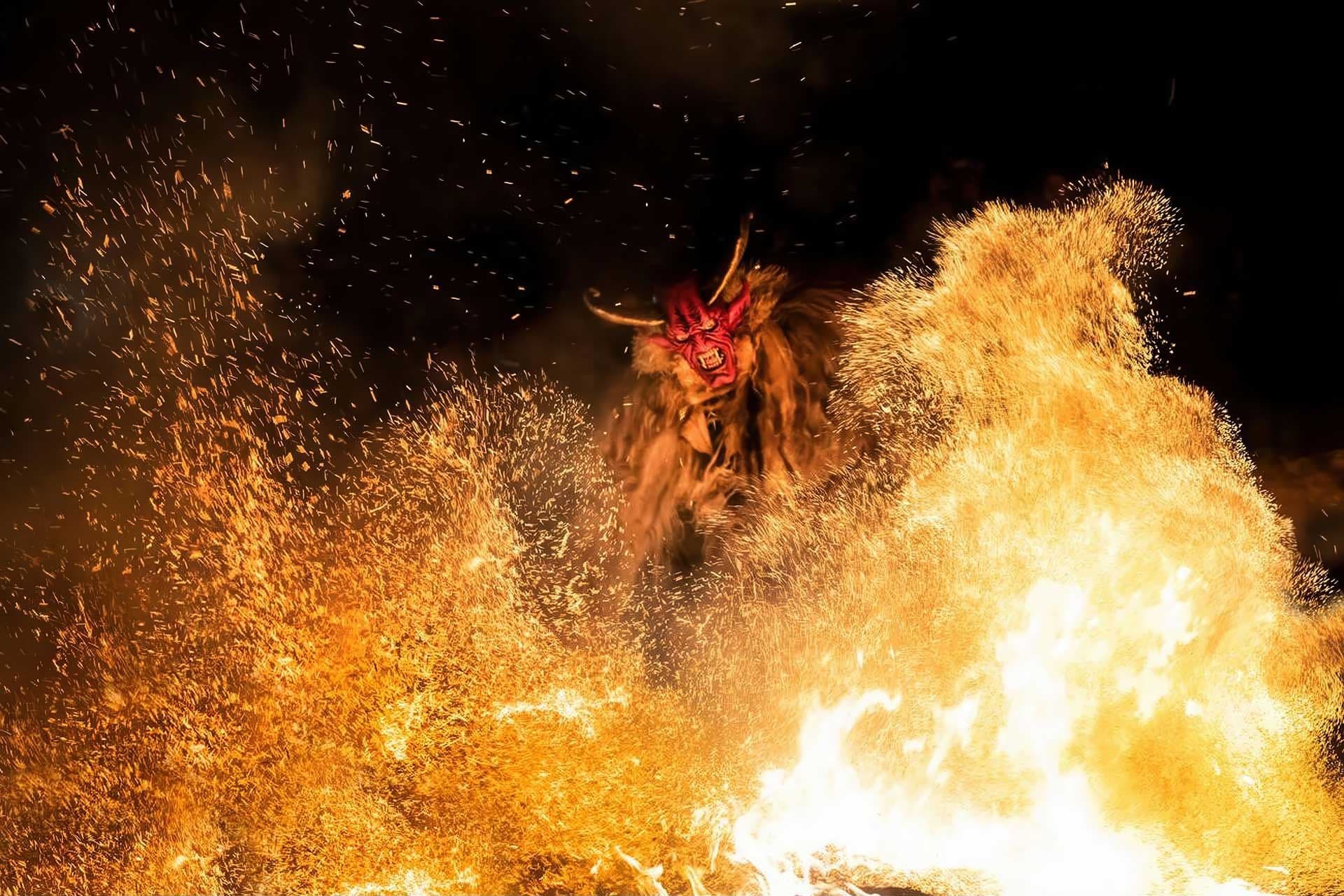
Outside the Alps, cities such as Munich and even parts of the United States have embraced Krampus festivals, although often in more commercialised or performative forms. These modern interpretations — featuring Krampus-themed pub crawls and parades — can blur the original purpose, yet they also highlight the creature’s growing resonance in a world craving myth and meaning.
Those looking to delve deeper into the lore can visit museums like the Krampusmuseum in Kitzbühel, Austria, which explores the evolution of the figure from pagan roots to pop culture. The artistry of the wooden masks, often carved by local artisans using larch and pine, is itself a fascinating craft tradition. Workshops and folklore exhibitions throughout the region provide insight into how these customs are preserved and passed down.
Ultimately, Krampus Night is more than a chilling spectacle. It is a living link to Europe’s ancient midwinter psyche — a time when long nights demanded stories, masks, and rituals to make sense of fear and uncertainty. In facing the darkness, communities reaffirmed their bonds, recognised the wildness within, and prepared for the hope of the returning sun.
Travelling to witness Krampus is not just about experiencing frightful fun. It is a cultural journey into the folds of forgotten folklore, a reminder that even in the heart of the festive season, the shadows still dance. And perhaps, in acknowledging them, the light shines even brighter.